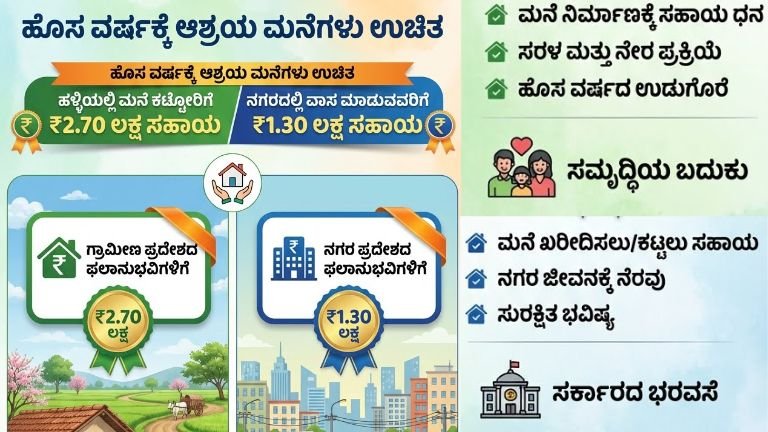
Free Housing Scheme New Year 2025: ₹2.70 Lakh for Rural Families and ₹1.30 Lakh for Urban Beneficiaries free home
Housing is not just about shelter; it is about dignity, security, and a stable future. Recognizing this fundamental need, the government has introduced a New Year Free Housing Assistance Scheme, offering substantial financial support to families who dream of owning a home but lack the resources to build one.
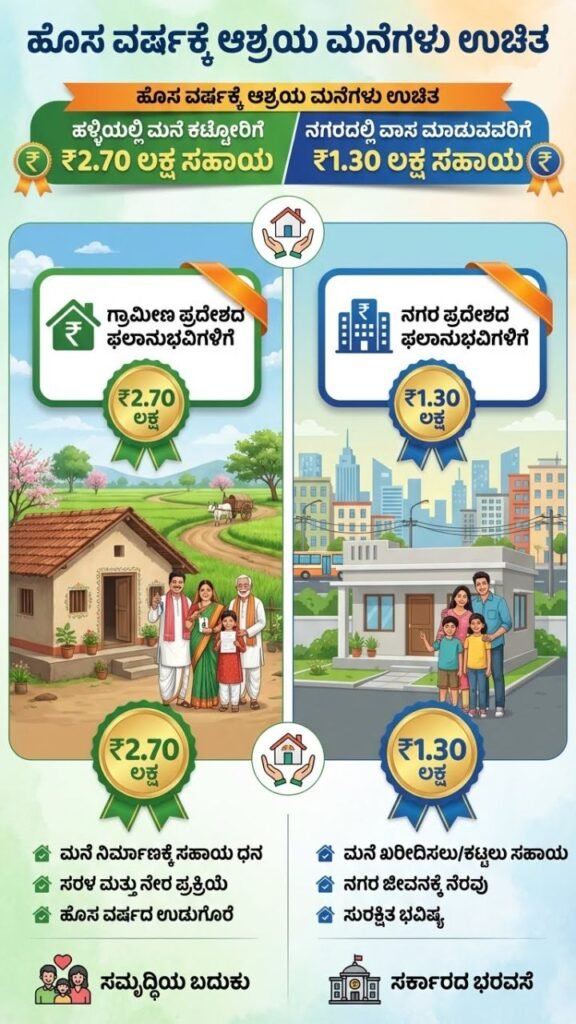
Under this initiative, rural (village) beneficiaries are eligible for financial assistance of ₹2.70 lakh, while urban (city) beneficiaries can receive ₹1.30 lakh to construct a permanent house. This scheme is designed to bridge the gap between rural and urban housing costs, ensuring equitable support based on living conditions and construction expenses.
This article explains the scheme in detail, including eligibility, benefits, objectives, rural vs urban differences, social impact, and why this initiative is a major step toward inclusive development.
Introduction: Why Affordable Housing Matters
For millions of families in India, especially those belonging to economically weaker sections, constructing a house remains an unfulfilled dream. Rising construction costs, lack of access to formal credit, and unstable incomes often force families to live in temporary shelters, rented houses, or unsafe structures.
Housing insecurity affects:
- Health and hygiene
- Children’s education
- Women’s safety
- Overall social stability
The government’s free housing assistance scheme aims to address these challenges by providing direct financial support, empowering families to build permanent, safe, and dignified homes.
Overview of the Free Housing Scheme
The New Year Housing Scheme provides direct financial assistance to eligible beneficiaries for house construction. The scheme distinguishes between rural and urban beneficiaries, acknowledging the different cost structures and living environments.
Financial Assistance Details
- Rural (Village) Areas: ₹2.70 lakh assistance
- Urban (City) Areas: ₹1.30 lakh assistance
The amount is provided specifically for house construction, ensuring beneficiaries can build durable and permanent homes.
Why Is Rural Assistance Higher Than Urban Assistance?
One of the most frequently asked questions is why rural beneficiaries receive a higher amount compared to urban beneficiaries. The reasons are practical and policy-driven.
Key Reasons:
- Larger House Size in Villages
Rural houses typically include open space, courtyards, and additional rooms. - Higher Material Transportation Costs
Construction materials often need to be transported from towns or cities to villages, increasing costs. - Limited Access to Credit
Rural families have fewer banking and loan facilities, making government support crucial. - Encouraging Rural Stability
Higher assistance helps reduce migration to cities by improving rural living conditions.
Urban beneficiaries, while receiving a lower amount, benefit from better access to infrastructure, services, and employment opportunities, which balances the support structure.
Objectives of the Scheme
The Free Housing Scheme is not just about building houses; it is about transforming lives.
Primary Objectives:
- Provide permanent housing to economically weaker families
- Eliminate kutcha (temporary) houses
- Improve living standards in rural and urban areas
- Promote social equality and dignity
- Strengthen community stability
- Support inclusive economic growth
Eligibility Criteria (General Overview)
Although eligibility rules may vary slightly based on state implementation, the scheme generally targets families who meet the following conditions:
- Belong to economically weaker or low-income groups
- Do not own a permanent house
- Are residents of rural villages or urban local bodies
- Priority given to:
- Scheduled Castes and Scheduled Tribes
- Women-headed households
- Senior citizens
- Persons with disabilities
- Widows and vulnerable families
Beneficiary selection is typically done through government databases, surveys, and local administrative verification.
Rural Housing Support: ₹2.70 Lakh Assistance
Key Features of Rural Housing Support
- Financial assistance of ₹2.70 lakh per house
- Intended for village residents
- Focus on durable construction using permanent materials
- Emphasis on sanitation, ventilation, and safety
Impact on Rural Families
For rural families, owning a house means:
- Protection from weather conditions
- Improved health and hygiene
- A stable environment for children
- Increased social respect within the village
The scheme also boosts rural employment by creating demand for local labor, masons, and suppliers.
Urban Housing Support: ₹1.30 Lakh Assistance
Key Features of Urban Housing Support
- Financial assistance of ₹1.30 lakh
- Designed for urban poor and low-income households
- Suitable for small plots or compact housing units
- Supports basic but permanent structures
Impact on Urban Families
Urban housing support helps families:
- Move out of slums or unsafe rentals
- Reduce monthly rent burden
- Achieve residential stability
- Access urban services like education, healthcare, and employment
Even though the assistance is lower than rural support, it plays a crucial role in improving urban living conditions.
Social and Economic Impact of the Scheme
1. Improved Quality of Life
Permanent housing significantly improves health, sanitation, and safety, especially for women, children, and the elderly.
2. Women Empowerment
Many housing schemes prioritize women beneficiaries, registering houses in their names, which enhances financial and social empowerment.
3. Employment Generation
House construction generates local employment, benefiting:
- Construction workers
- Masons
- Material suppliers
- Transporters
4. Reduced Migration
Better housing in villages reduces distress migration to cities, easing pressure on urban infrastructure.
Role of Local Authorities
Local government bodies play a crucial role in implementing the scheme effectively.
Responsibilities Include:
- Identifying eligible beneficiaries
- Verifying land ownership or availability
- Monitoring construction progress
- Ensuring funds are used correctly
- Providing technical guidance
Transparency and accountability at the local level ensure the scheme reaches the intended beneficiaries.
Construction Guidelines and Quality Standards
To ensure long-term benefits, the scheme emphasizes:
- Use of quality construction materials
- Safe structural design
- Basic amenities like sanitation and ventilation
- Disaster-resilient construction practices
Beneficiaries are encouraged to follow approved designs and construction standards.
Challenges and Solutions
Common Challenges:
- Delays in fund disbursement
- Lack of technical knowledge among beneficiaries
- Rising material costs
- Land ownership disputes
Possible Solutions:
- Digital monitoring systems
- Technical assistance from local engineers
- Phased fund release based on progress
- Awareness campaigns at village and ward levels
Why This Scheme Is Important in 2025
The launch of this housing support at the beginning of the year symbolizes a renewed commitment to social welfare. As economic uncertainties continue, housing security provides families with a strong foundation to rebuild and grow.
Key reasons this scheme matters now:
- Inflation and rising housing costs
- Post-pandemic economic recovery
- Focus on inclusive development
- Long-term nation-building goals
Comparison Between Rural and Urban Assistance
| Aspect | Rural Areas | Urban Areas |
|---|---|---|
| Assistance Amount | ₹2.70 lakh | ₹1.30 lakh |
| House Size | Larger | Compact |
| Construction Cost | Higher due to transport | Relatively controlled |
| Infrastructure Access | Limited | Better |
| Policy Focus | Rural stability | Urban housing safety |
Long-Term Vision of the Housing Initiative
The free housing scheme aligns with the government’s broader vision of:
- Housing for all
- Poverty reduction
- Social justice
- Balanced rural-urban development
Permanent housing is seen as a cornerstone for education, health, and economic progress.
apply Link
A Step Toward Dignified Living
The New Year Free Housing Scheme offering ₹2.70 lakh for rural families and ₹1.30 lakh for urban families is more than a financial program—it is a promise of dignity, safety, and hope.
By addressing housing inequality and providing targeted support based on living environments, the scheme empowers families to build secure futures. Its success depends on effective implementation, transparency, and awareness among beneficiaries.
For thousands of families, this initiative marks the beginning of a new chapter—one built on a strong foundation, literally and figuratively.