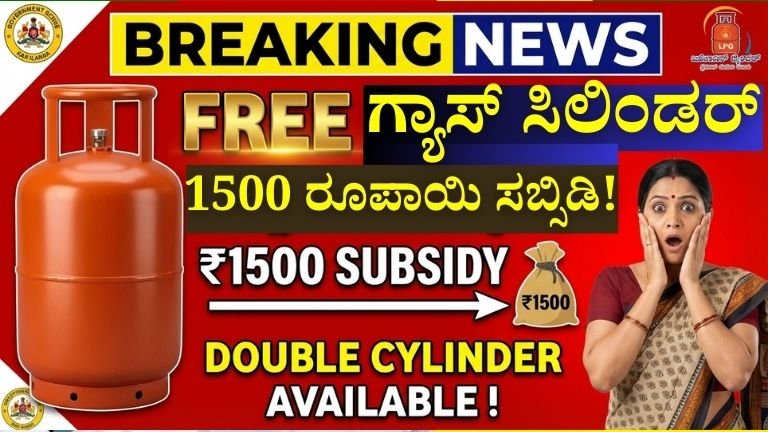
Free Gas Cylinder Scheme 2026: Apply Again for Double LPG Cylinders with ₹1,500 Subsidy – Complete Guide
The Government has once again reopened applications for the Free Gas Cylinder Scheme in 2026, bringing major relief to low-income families across India. Under this renewed initiative, eligible beneficiaries can receive double LPG cylinders along with a ₹1,500 subsidy, making clean cooking fuel more affordable and accessible.
With rising fuel prices and increasing household expenses, this scheme plays a crucial role in supporting economically weaker families, especially women and rural households. In this detailed guide, you will find complete information about eligibility criteria, benefits, documents required, how to apply online and offline, subsidy structure, important dates, and frequently asked questions.
This article is written in a professional and SEO-optimized format to help you clearly understand the scheme and apply without confusion.
Overview of the Free Gas Cylinder Scheme 2026
The Free Gas Cylinder Scheme 2026 is designed to promote clean cooking fuel usage among low-income households. It aims to:
- Reduce dependency on firewood and traditional chulhas
- Improve women’s health by reducing indoor air pollution
- Provide financial relief through subsidy support
- Encourage the adoption of LPG in rural and semi-urban areas
Under the 2026 update:
- Eligible families can receive two LPG cylinders (double cylinder support)
- A subsidy of up to ₹1,500 is provided
- Direct Benefit Transfer (DBT) ensures transparency
- Applications have been reopened for new beneficiaries
This move is expected to benefit lakhs of households that were previously left out or were unable to complete their registration.
Key Benefits of the Scheme
Double LPG Cylinder Benefit
Instead of just one cylinder connection, eligible families can receive support for two cylinders. This ensures:
- Continuous availability of cooking gas
- No disruption in household cooking
- Reduced dependency on borrowing cylinders
₹1,500 Subsidy Support
The subsidy amount of ₹1,500 is either:
- Credited directly to the beneficiary’s bank account
- Adjusted against LPG refill cost
- Provided in installments depending on state guidelines
Special Focus on Women
In most cases, LPG connections are issued in the name of women, empowering them financially and socially.
Health and Environmental Benefits
Traditional cooking methods using firewood and coal cause serious respiratory diseases. LPG:
- Produces less smoke
- Reduces indoor air pollution
- Protects women and children from harmful emissions
Who Is Eligible?
Eligibility may vary slightly by state, but generally the following categories qualify:
Basic Eligibility Criteria
- Applicant must be an Indian citizen
- Must belong to a low-income household
- BPL (Below Poverty Line) card holder or ration card holder
- No existing LPG connection in the household (for new applicants)
- Aadhaar linked with bank account
Priority Categories
Priority may be given to:
- Women-headed households
- SC/ST families
- Rural households
- Widows and senior citizens
- Families listed in Socio-Economic Caste Census (SECC) data
Documents Required
Before applying, ensure you have the following documents ready:
- Aadhaar Card
- Ration Card (BPL/APL as applicable)
- Bank Account Details
- Passport-size photographs
- Address proof
- Mobile number linked to Aadhaar
- Income certificate (if required)
Submitting accurate and complete documents ensures faster approval.
How to Apply Online for Free Gas Cylinder Scheme 2026
The government has made the process simple and transparent.
Step-by-Step Online Application Process:
- Visit the official LPG or government scheme portal.
- Click on “Free Gas Cylinder Scheme 2026” or related option.
- Register using mobile number and Aadhaar.
- Fill in personal details such as name, address, ration card number.
- Upload required documents.
- Submit the application form.
- Note down the application reference number.
After verification, you will receive SMS updates regarding approval status.
Offline Application Process
For those without internet access:
- Visit nearest LPG distributor office or Common Service Center (CSC).
- Collect the application form.
- Fill in the required details carefully.
- Attach photocopies of necessary documents.
- Submit the form at the office.
- Receive acknowledgment slip.
Officials will verify details before approving the connection.
How the ₹1,500 Subsidy Works
The subsidy mechanism may work in one of the following ways:
Direct Benefit Transfer (DBT)
- Subsidy is credited directly into the beneficiary’s bank account.
- The consumer pays full cylinder price upfront.
- Subsidy amount is deposited within a few days.
Adjusted Subsidy Model
- Beneficiary pays reduced amount at the time of refill.
- Subsidy is adjusted directly in the invoice.
The exact process depends on state-level implementation.
Why Double Cylinder Is Important
Many poor households struggle with refill delays. Having two cylinders:
- Ensures backup supply
- Prevents cooking interruptions
- Reduces emergency expenses
Double cylinder support improves convenience and reliability for families.
Common Reasons for Application Rejection
Applications may be rejected due to:
- Incorrect Aadhaar details
- Bank account not linked
- Duplicate LPG connection in same household
- Mismatch in ration card data
- Incomplete documentation
Always double-check information before submission.
How to Check Application Status
To check your status:
- Visit the official portal
- Enter application number or registered mobile number
- View approval or pending status
You may also contact the local LPG distributor for updates.
Impact on Rural India
This scheme significantly benefits rural communities:
- Reduces dependence on firewood collection
- Saves time for women
- Improves hygiene and cooking conditions
- Enhances quality of life
Access to clean cooking fuel is directly linked to improved health outcomes.
Economic Relief for Families
Rising LPG prices create financial pressure. With ₹1,500 subsidy:
- Families save on refill expenses
- Monthly budgeting becomes easier
- Inflation impact is reduced
For low-income families, even small savings are significant.
Frequently Asked Questions (FAQs)
Q1. Is the scheme available across all states?
It depends on central and state government coordination. Most states participate, but benefits may vary.
Q2. Can existing LPG users apply?
In some cases, existing single-cylinder users may upgrade to double cylinder support.
Q3. How long does approval take?
Generally 15 to 30 days after document verification.
Q4. Is Aadhaar mandatory?
Yes, Aadhaar linkage is usually compulsory for subsidy transfer.
Q5. Can I apply without BPL card?
Some states allow low-income APL families to apply, subject to eligibility.
Safety Guidelines for LPG Users
Receiving LPG is not enough; safe usage is essential.
- Install cylinder in well-ventilated area
- Check for gas leakage regularly
- Use ISI-marked regulators and pipes
- Keep emergency numbers accessible
Safety awareness reduces accidents and ensures secure cooking practices.
Transparency and Digital Monitoring
The 2026 scheme emphasizes digital monitoring to prevent misuse:
- Aadhaar-based verification
- DBT payment system
- Real-time tracking of cylinder distribution
- Biometric authentication at distribution centers
This ensures benefits reach genuine beneficiaries.
Government’s Vision Behind the Scheme
The long-term objective includes:
- Universal LPG coverage
- Women empowerment
- Reduction in carbon emissions
- Improvement in rural health standards
Clean cooking energy is a crucial component of sustainable development goals.
Important Tips Before Applying
- Ensure Aadhaar is linked with bank account
- Check if mobile number is active
- Keep scanned documents ready
- Avoid middlemen or fraud agents
- Apply only through official channels
Fraud prevention is important. Never share OTP with anyone.
The Free Gas Cylinder Scheme 2026 with ₹1,500 subsidy and double cylinder benefit is a major welfare initiative designed to support economically weaker families. It not only reduces financial burden but also promotes clean cooking practices and better health conditions.
Reopening of applications provides a fresh opportunity for eligible families who missed earlier registrations. If you or someone in your community qualifies, ensure timely application and proper documentation.
Access to clean cooking fuel is not just a convenience; it is a necessity for health, dignity, and sustainable living. By leveraging this scheme, families can improve their quality of life while reducing environmental impact.
If you are eligible, apply now and take full advantage of the benefits offered under the 2026 Free Gas Cylinder Subsidy Scheme.
Free Gas Cylinder Scheme 2026 – Double Cylinder + ₹1,500 Subsidy
Complete Extended Guide with Policy Background, Financial Structure, Implementation Model & Practical Insights
The reopening of applications for the Free Gas Cylinder Scheme 2026 has generated significant attention among low-income households across India. With the added benefit of double LPG cylinders and a ₹1,500 subsidy, this initiative aims to strengthen clean cooking access, reduce financial stress, and improve rural household welfare.
This extended guide provides deeper insight into the scheme’s financial structure, policy intent, implementation mechanism, economic impact, operational workflow, and beneficiary best practices.
Policy Background and Government Objective
India has made major progress in expanding LPG coverage over the last decade. However, affordability remains a challenge for many economically weaker families. While access increased, refill frequency dropped in some low-income households due to rising LPG prices.
The 2026 relaunch addresses three core policy gaps:
- Affordability of refills
- Continuity of supply
- Encouraging sustained LPG usage
The introduction of double cylinders ensures uninterrupted cooking access, while the ₹1,500 subsidy offsets refill cost burden.
The government’s long-term objectives include:
- Increasing clean fuel adoption
- Reducing indoor air pollution
- Supporting women empowerment
- Lowering dependence on biomass fuel
- Promoting environmental sustainability
Detailed Benefit Structure
Double Cylinder Model
Under this updated model:
- Beneficiaries receive two LPG cylinders instead of one
- One cylinder can be used while the other serves as backup
- Reduces emergency fuel shortages
- Minimizes refill waiting time
This is particularly beneficial in rural areas where delivery delays are common.
₹1,500 Subsidy – Financial Breakdown
The ₹1,500 subsidy may be structured in multiple ways depending on state implementation:
Model A – Lump Sum Credit
- ₹1,500 transferred directly to beneficiary’s bank account
- Paid after first refill
Model B – Installment Subsidy
- Subsidy divided across multiple refills
- For example: ₹300 per refill for 5 refills
Model C – Direct Price Adjustment
- Consumer pays reduced price at time of refill
- Subsidy adjusted at distributor level
All payments are typically processed under Direct Benefit Transfer (DBT) mechanism.
Economic Impact on Low-Income Families
For families earning ₹8,000–₹15,000 per month, LPG refill cost is significant. The scheme provides:
- Immediate cash flow relief
- Reduced dependence on informal borrowing
- Lower medical expenses due to smoke reduction
- Improved productivity (time saved from firewood collection)
Household Budget Improvement Example
Without subsidy:
- Average refill cost: ₹900–₹1,100
- 6 refills per year = ₹5,400–₹6,600 annually
With ₹1,500 subsidy:
- Effective annual cost reduces substantially
- Improves disposable income
Women Empowerment Angle
Most LPG connections are issued in the name of women. This creates:
- Financial identity
- Bank linkage
- Direct benefit ownership
- Increased decision-making power in household
Women no longer need to depend on firewood collection, which often requires hours of physical labor.
Environmental and Health Advantages
Health Impact
Traditional cooking using wood or coal produces:
- Carbon monoxide
- Particulate matter (PM2.5)
- Toxic fumes
These cause:
- Respiratory infections
- Eye irritation
- Chronic lung disease
LPG significantly reduces these risks.
Environmental Impact
- Decreases deforestation
- Reduces carbon emissions
- Supports climate goals
- Promotes sustainable energy transition
Clean cooking energy is directly aligned with India’s sustainable development targets.
Expanded Eligibility Criteria
While exact criteria vary by state, expanded categories may include:
- BPL ration card holders
- Antyodaya Anna Yojana (AAY) families
- SC/ST households
- Rural poor families
- Construction workers
- Agricultural laborers
- Widows and single women
- Senior citizens without income support
Income limits may apply depending on state-level policy.
Application Process – Detailed Workflow
Step 1: Pre-Verification
- Check eligibility status using ration card number
- Ensure Aadhaar is linked to bank account
Step 2: Registration
- Apply through official LPG portal or CSC center
- Submit required documents
Step 3: Field Verification
- Officials verify household details
- Cross-check duplicate LPG connections
Step 4: Approval Notification
- SMS confirmation sent
- Application ID generated
Step 5: Cylinder Allotment
- LPG distributor schedules delivery
- Safety demonstration provided
Step 6: Subsidy Activation
- DBT system activated
- Bank credit processed after refill
Timeline Expectations
- Application processing: 15–30 days
- Field verification: 7–14 days
- First cylinder delivery: Within 10 days after approval
- Subsidy credit: 3–7 working days after refill
Delays may occur during high-demand periods.
Common Mistakes to Avoid
- Incorrect bank account number
- Aadhaar not linked
- Duplicate LPG connection
- Wrong ration card details
- Submitting unclear document copies
- Using unauthorized agents
Always apply through official channels only.
Digital Transparency and Fraud Prevention
The scheme uses technology to prevent misuse:
- Aadhaar authentication
- Bank account verification
- Distributor-level tracking
- Digital subsidy ledger
Beneficiaries should:
- Never share OTP
- Avoid paying bribes
- Keep acknowledgment slip safe
Upgrade Option for Existing LPG Users
Some states allow:
- Conversion from single to double cylinder
- Additional subsidy enrollment
- Updating KYC for continued benefits
Existing users should contact their distributor to check eligibility.
Role of LPG Distributors
Distributors are responsible for:
- Application verification
- Safety training
- Cylinder installation
- Refill tracking
- Customer grievance handling
Always maintain regular communication with your assigned distributor.
Grievance Redressal Mechanism
If issues arise:
- Contact LPG distributor helpline
- File complaint via official portal
- Visit local food & civil supplies office
- Use state grievance helpline numbers
Maintain application ID and bank details for reference.
Long-Term Vision of the Scheme
The government aims to achieve:
- Universal clean cooking coverage
- Zero household dependency on firewood
- Reduced rural health burden
- Increased women workforce participation
- Digital subsidy ecosystem
By 2030, the target is to ensure consistent LPG usage across all low-income households.
Comparison: Traditional Cooking vs LPG
| Factor | Traditional Fuel | LPG |
|---|---|---|
| Smoke Level | High | Very Low |
| Health Risk | Severe | Minimal |
| Time Required | High | Low |
| Environmental Impact | Deforestation | Cleaner |
| Safety | Risky | Controlled |
LPG is clearly a safer and more efficient cooking solution.
Important Safety Tips
- Keep cylinder upright
- Install in ventilated kitchen
- Check rubber tube every 6 months
- Turn regulator off when not in use
- Avoid storing near heat sources
Safety awareness ensures long-term benefits.
Financial Planning Advice for Beneficiaries
To maximize benefit:
- Use subsidy savings for essential expenses
- Plan refill cycle wisely
- Monitor DBT credits regularly
- Maintain minimum bank balance
Financial discipline ensures sustainability.
Frequently Asked Extended Questions
Is the scheme permanent?
It depends on government budget allocation and policy updates.
Can urban families apply?
Yes, if they meet income and eligibility conditions.
What if subsidy is not credited?
Verify bank linkage and contact distributor.
Is there any application fee?
No official fee should be charged.
Can I transfer connection to another state?
Transfer rules depend on LPG company guidelines.
Overall Social Impact
This scheme contributes to:
- Improved rural living standards
- Women health protection
- Environmental sustainability
- Financial inclusion
- Energy security
It is more than a subsidy program—it is a social transformation initiative.
Click Hear to Apply
The Free Gas Cylinder Scheme 2026 offering double cylinders and ₹1,500 subsidy represents a major relief package for low-income households. By combining financial support, clean energy access, and women empowerment, the initiative strengthens India’s social welfare framework.
Families who meet eligibility criteria should apply promptly and ensure proper documentation. Clean cooking is not a luxury—it is a fundamental need that directly impacts health, dignity, and economic stability.
Timely application, accurate details, and awareness of official procedures will help beneficiaries maximize the scheme’s advantages.