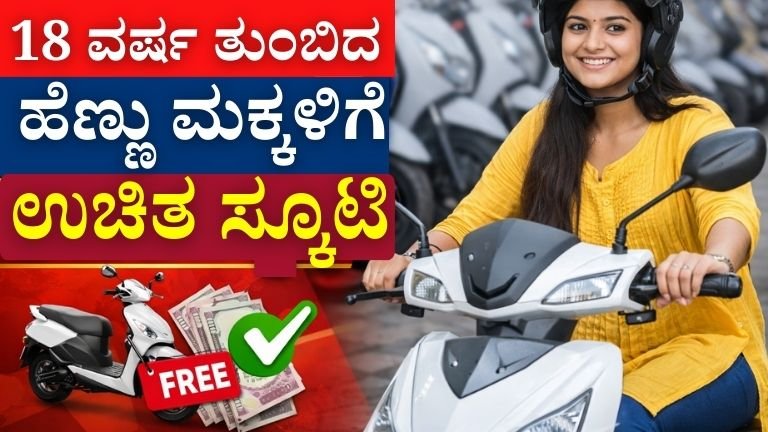
Free and Subsidized Electric Scooty Schemes for Women and Students in India – Complete Guide
In recent years, both the Karnataka Government and several other state governments in India have introduced Free and Subsidized Electric Scooty Schemes aimed at empowering women and girl students. These initiatives are designed to improve mobility, enhance access to education and employment, support working women such as milk vendors, and promote eco-friendly electric vehicles.
With rising fuel prices, increasing transportation costs, and the push toward green mobility, electric scooters have become a practical and sustainable solution. Recognizing this, governments are offering 100% free electric scooters or heavy subsidies to eligible beneficiaries, especially women from economically weaker backgrounds.
This article provides a detailed and reliable overview of these schemes, including objectives, eligibility, documents required, application process, benefits, and important precautions.
Background and Purpose of Free Electric Scooty Schemes
Women and girl students often face mobility challenges due to financial limitations, lack of public transport in rural areas, and safety concerns. These issues can directly impact their education, employment opportunities, and daily livelihood.
To address this, various state governments launched electric scooty schemes with the following goals:
- Improve last-mile connectivity for women
- Support students pursuing higher education
- Help working women and milk vendors reach workplaces efficiently
- Encourage electric vehicle adoption
- Reduce carbon emissions and fuel dependency
- Promote women empowerment and self-reliance
By providing electric scooters either free of cost or at subsidized prices, these schemes help women become independent and economically active.
Who Are These Schemes Meant For?
The free or subsidized electric scooty schemes are primarily targeted at:
- Girl students who have completed Class 12 (PUC)
- Women pursuing college or professional education
- Working women in urban and rural areas
- Milk vendors and self-employed women
- Women from low-income families
- Women belonging to SC/ST/OBC or minority communities (varies by state)
Although the exact eligibility conditions differ from state to state, the core focus remains the same: empowering women through mobility.
Key Highlights of Free Scooty Schemes
1. Objective of the Scheme
The primary objective is to provide safe, affordable, and eco-friendly transportation to women and students. The schemes aim to reduce drop-out rates in education, improve attendance, and enable women to participate more actively in the workforce.
2. Type of Benefit
Depending on the state and scheme structure, beneficiaries may receive:
- 100% free electric scooty, or
- 50%–90% subsidy on the cost of the electric scooter
In some cases, the subsidy amount is transferred directly to the beneficiary’s bank account.
3. Focus on Electric Vehicles
Unlike earlier petrol scooter schemes, these initiatives focus exclusively on electric scooters to:
- Lower running costs
- Reduce pollution
- Promote sustainable transport
Eligibility Criteria (General Guidelines)
While eligibility conditions may vary slightly between states, most free electric scooty schemes follow these general rules:
Age Requirement
- Applicant must be 18 years or above
Gender
- Only women applicants are eligible
Educational Qualification
- Minimum Class 10 or Class 12 pass
- Priority given to students pursuing higher education
Income Limit
- Applicant must belong to a low-income family
- Annual family income limits are fixed by the state government
Residency
- Applicant must be a permanent resident of the respective state
Employment/Education Status
- Students, working women, self-employed women, or milk vendors
Documents Required for Application
Applicants must keep the following documents ready while applying:
- Aadhaar Card
- Residence/Domicile Certificate
- Income Certificate
- Caste Certificate (if applicable)
- Educational Certificates (10th/12th marks cards)
- Bank Passbook Copy
- Passport Size Photograph
- Mobile Number linked with Aadhaar
Incorrect or fake documents can lead to rejection of the application.
How to Apply for Free Electric Scooty Schemes
Most states follow a completely online application process to ensure transparency and ease of access.
Step-by-Step Application Process
- Visit the official government portal such as myScheme or the concerned state department website
- Search for Free Scooty Scheme / Electric Scooty Scheme
- Carefully read the eligibility criteria and instructions
- Click on Apply Online
- Fill in personal, educational, and income details
- Upload required documents
- Submit the application
- Save or print the application acknowledgment number
Applicants are advised to regularly check official updates regarding selection lists and verification schedules.
Selection Process
The selection of beneficiaries is usually done based on:
- Eligibility verification
- Income priority (lower income gets higher priority)
- Reservation norms (SC/ST/OBC/minority quotas)
- Availability of funds
In some states, if applications exceed the quota, a merit-based or lottery system may be used.
Benefits of Free and Subsidized Electric Scooty Schemes
1. Educational Continuity
Many girl students drop out due to transportation problems. Scooty schemes help them attend colleges regularly.
2. Employment Opportunities
Working women can travel independently without relying on public transport.
3. Economic Savings
Electric scooters have very low running costs compared to petrol vehicles.
4. Time Efficiency
Reduced travel time improves productivity and work-life balance.
5. Environmental Impact
Electric vehicles reduce air pollution and carbon emissions.
6. Social Empowerment
Mobility leads to confidence, independence, and improved social participation.
Special Focus on Milk Vendors and Rural Women
In rural areas, women involved in milk distribution and agriculture-related activities often travel long distances daily. These schemes significantly reduce physical strain and fuel expenses, improving their income and quality of life.
Important Warning About Fake Schemes
In recent times, several fake messages and social media posts have circulated claiming “instant free scooty registration” or “WhatsApp approval links.”
Important Safety Tips:
- Never trust unofficial links
- Do not pay registration fees to unknown sources
- Apply only through official government portals
- Verify announcements through state government websites or newspapers
Government schemes do not ask for money through private calls or messages.
States Implementing Similar Schemes
Apart from Karnataka, various other states have introduced or announced similar electric scooty schemes for women and students, each with its own eligibility rules and benefits.
Applicants should always refer to state-specific notifications for accurate details.
Future Scope of Electric Scooty Schemes
With India’s focus on:
- Green energy
- Electric mobility
- Women empowerment
More states are expected to expand these schemes with:
- Higher subsidy amounts
- Better EV infrastructure
- Charging station support
- Maintenance incentives
These initiatives align with India’s long-term sustainability goals.
Click Hear to Apply
Free and subsidized electric scooty schemes represent a transformational step toward women empowerment in India. By addressing mobility challenges, these programs open doors to education, employment, and independence for thousands of women and students.
Eligible applicants are encouraged to apply only through official platforms, keep documents ready, and stay updated with government notifications. With the right awareness and timely application, these schemes can become a powerful tool for social and economic progress.