Revamping the PDS: Karnataka’s Bold Moves to Plug Rations Leakage, Extend Timings, and Offer Cash Alternatives
The Public Distribution System (PDS) in Karnataka is undergoing one of its most significant overhauls in recent years. In a decisive stance aimed at reforming the state’s food security framework, Food and Civil Supplies Minister K.H. Muniyappa has announced a series of major policy shifts. From revising ration shop operating hours to curbing black-marketing and exploring direct cash transfers, the government is taking proactive steps to ensure that welfare benefits reach the truly needy without leakages.
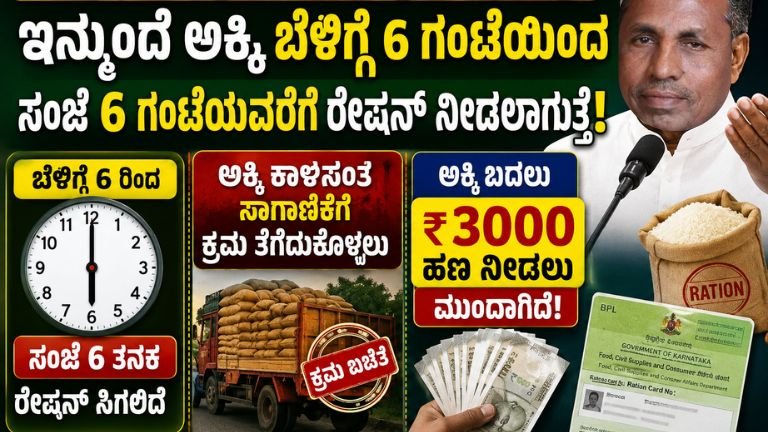
If you have been following the local news, you probably heard Minister Muniyappa’s latest statements: Fair Price Shops (FPS) will now operate from 6:00 AM to 6:00 PM, strict measures are being implemented against the illegal smuggling of PDS rice, and a proposal is on the table to offer ₹3,000 in cash as an alternative to free rice under specific conditions.
In this comprehensive post, we will break down what these announcements mean for everyday citizens, the logistics behind the changes, the debate surrounding cash versus grain, and how these moves aim to dismantle long-standing black-market networks.
1. New Operating Hours: 6:00 AM to 6:00 PM
One of the most immediate and practical changes for beneficiaries is the overhaul of ration shop timings. Traditionally, Fair Price Shops operated during fixed, often inconvenient hours that overlapped with regular working shifts. Daily wage laborers, factory workers, and domestic helps frequently faced a tough dilemma: lose a half-day’s wage standing in line for food grains, or skip getting their entitled rations altogether.
Why the Shift Matters:
- Convenience for Daily Wage Earners: By opening doors as early as 6:00 AM, working-class citizens can collect their monthly quota of rice and food grains before heading out to work.
- Reduction in Queue Times: Spreading out the footfall over a 12-hour window prevents severe overcrowding during peak afternoon hours.
- Better Accountability: Long operational hours make it harder for shop dealers to claim they were closed due to stock issues or short working hours.
“Welfare programs must adapt to the daily routines of the working poor, not the other way around. Extending operating hours from dawn to dusk ensures no family goes hungry due to a conflict with work schedules.”
2. Cracking Down on Black-Market Rice Smuggling
The diversion of heavily subsidized PDS rice—often referred to as “Anna Bhagya rice”—into the black market has been a persistent headache for consecutive governments. Rogue agents, corrupt intermediaries, and unscrupulous millers often buy rice off beneficiaries for cheap prices or divert entire truckloads before they reach the ration shops. This rice is then polished, repackaged, and resold in the commercial market at premium prices, or smuggled across state borders to neighboring states like Maharashtra, Andhra Pradesh, and Tamil Nadu.
Minister Muniyappa emphasized that the state government is taking a zero-tolerance approach to this illegal trade.
Key Measures to Curb Smuggling:
- GPS Tracking of Supply Vehicles: Trucks carrying PDS commodities are being fitted with GPS tracking systems to monitor their routes from Food Corporation of India (FCI) godowns to Fair Price Shops in real-time.
- Biometric Authentication at Scale: Beneficiaries must authenticate their identities using Aadhaar-linked biometrics (e-KYC) to ensure that rations are not claimed under phantom or duplicate cards.
- Task Forces and Border Checkpoints: Increased vigilance at inter-state border check posts to intercept unauthorized commercial vehicles carrying PDS-branded grain.
- Cancellation of Licenses: Fair Price Shop owners found guilty of aiding illegal diversions will face immediate cancellation of their licenses, along with criminal charges under the Essential Commodities Act.
3. The Big Proposal: ₹3,000 Cash Instead of Rice?
Perhaps the most talked-about aspect of the Minister’s statement is the discussion surrounding direct cash transfers—specifically, the option of providing ₹3,000 in cash instead of rice quotas.
While the Anna Bhagya scheme promises 10 kg of food grains per person for BPL (Below Poverty Line) cardholders, central government allocations and local procurement constraints have occasionally led to supply shortages. To bridge this gap, the Karnataka government previously introduced a direct benefit transfer (DBT) model to pay cash for the extra 5 kg portion that could not be procured in grain form.
The current discussion around offering ₹3,000 reflects a broader policy debate: Is Direct Cash Transfer better than In-Kind Food Distribution?
The Arguments in Favor of Cash Assistance:
- Freedom of Choice: Families can use the cash to buy other essential nutrients, such as pulses, vegetables, milk, and eggs, leading to a more balanced diet.
- Elimination of Transportation and Storage Costs: Distributing cash directly into bank accounts eliminates warehousing costs, spoilage losses, and logistics expenses.
- Dismantling the Black Market: If beneficiaries receive cash directly, there is no physical rice left at ration shops for corrupt middlemen to steal and resell.
The Challenges and Concerns:
- Inflation Sensitivity: While a fixed cash amount gives choice, food prices fluctuate. If commercial market rice prices spike, ₹3,000 might buy less food than the promised physical grain allocation.
- Risk of Diversion: Critics argue that cash transfers might sometimes be diverted towards non-food expenditures, whereas grain directly guarantees household food security.
- Banking Access in Rural Areas: Beneficiaries living in remote areas may struggle with bank visits, micro-ATM downtime, or technical glitches in processing DBT payments.
4. How the New Policy Impacts Everyday Citizens
To understand the real-world impact of these reforms, let’s compare the old framework with the new updates being rolled out by the Department of Food and Civil Supplies:
| Feature | Earlier System | New System / Proposed Reforms |
| Ration Shop Hours | Restricted daytime hours (e.g., 10 AM – 5 PM) | 6:00 AM to 6:00 PM (12-hour continuous window) |
| Supply Chain Tracking | Manual register checks & random audits | GPS-tracked transit & digital e-KYC integration |
| Grain Deficit Strategy | Fixed distribution with potential delays | Direct Benefit Transfer / ₹3,000 cash equivalent option |
| Anti-Smuggling Enforcement | Local police inspections | Specialized task forces & inter-state border monitoring |
5. What Should Beneficiaries Do Now?
If you or people in your community rely on the PDS system in Karnataka, here are a few steps to ensure smooth access to your entitlements under the updated guidelines:
- Update Biometrics: Ensure that the Aadhaar details and mobile numbers linked to your BPL/AAY ration cards are up to date to avoid issues during biometric scanning.
- Link Bank Accounts: Make sure your bank account is active and seeded with your Aadhaar number to receive Direct Benefit Transfers (DBT) seamlessly without delay.
- Utilize New Timings: Plan your visit to your local Fair Price Shop early in the morning or later in the afternoon to avoid peak crowd hours.
- Report Misconduct: If you notice illegal hoarding, demand for extra money, or diversion of PDS grains in your area, report it immediately to the local Food Inspector or the official helpline of the Food and Civil Supplies Department.
A Modernized Food Security Net
Minister K.H. Muniyappa’s announcements signify a pivotal moment for Karnataka’s public distribution network. By combining extended shop hours for public convenience, tech-driven anti-smuggling measures for transparency, and financial alternatives like cash transfers, the state is aiming for a leaner, more effective welfare delivery system.
While implementing cash alternatives on a massive scale will require careful balancing to safeguard food security, the focus on curbing black-market leakage is a step in the right direction. As these rules take effect, citizens can look forward to a more flexible, accountable, and hassle-free ration distribution experience across Karnataka.