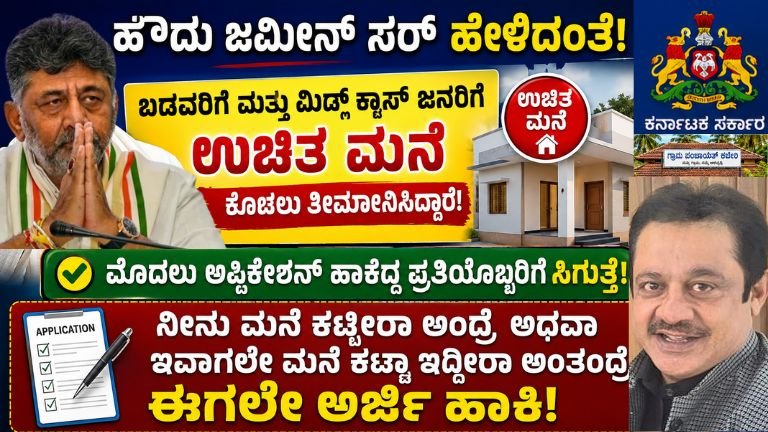
Comprehensive Guide to Affordable Housing: Transforming Dreams into Reality for the Poor and Middle Class, zameer ahmed jamir
Introduction: The Vision of Dignified Housing
Shelter is one of the most fundamental human needs, alongside food and clothing. Yet, for millions of families across the globe and specifically within developing regions, owning a brick-and-mortar home remains a distant, lifelong dream. High land prices, skyrocketing construction costs, and stagnant wages often push the poor and the middle class into rented spaces or substandard living conditions.
When leaders and policymakers—such as Housing Ministers and community representatives—announce mass housing schemes, it represents more than just a bureaucratic policy; it signifies a socio-economic revolution. The recent declaration that the government has resolved to provide free or heavily subsidized housing to the poor and middle-class segments is a monumental step toward bridging the wealth gap. By ensuring that every early applicant secures a home and extending support to those currently mid-construction, this initiative seeks to eradicate homelessness and elevate the standard of living for the masses.
Decoding the Announcement
The core message delivered by the leadership highlights three critical pillars:
-
Inclusivity: The scheme targets both the absolute poor (Below Poverty Line/BPL) and the squeezed middle class (Middle Income Groups/MIG), ensuring no vulnerable segment is left behind.
-
Prioritization: A “first-come, first-served” or structured early-bird system ensures that citizens who showed immediate intent and filled out their applications early are guaranteed allocation.
-
Active Support for Self-Construction: The policy doesn’t just hand over keys to pre-built apartments; it actively invites individuals who are either planning to build on their own land or are already halfway through construction to apply for financial assistance and subsidies.
Socio-Economic Classifications: Who Benefits?
To understand the magnitude of this housing drive, it is essential to look at the target demographics.
The Underprivileged and Below Poverty Line (BPL) Segment
For this group, a house is not an investment; it is a means of survival. This scheme offers them fully constructed units or total financial grants, removing them from hazardous informal settlements and placing them into safe, hygienic environments with proper sanitation.
The Squeezed Middle Class
The middle class often finds itself in a policy blind spot—too affluent for traditional welfare, yet too financially strained to afford commercial real estate. By offering interest subventions, subsidized raw materials, or direct financial aid for house construction, this initiative provides the middle class with the breathing room needed to build an asset without drowning in predatory debt.
Types of Assistance Offered Under the Scheme
Government housing initiatives generally deploy a multi-pronged strategy to cater to different regional and financial needs.
+-------------------------------------------------------------------------+
|                       HOUSING ASSISTANCE MATRIX                         |
+------------------------------------+------------------------------------+
| Beneficiary Type                   | Type of Benefit Provided           |
+------------------------------------+------------------------------------+
| Landless & Homeless Poor           | Ready-to-move-in flats/houses      |
| Land Owners (No Capital)           | Direct Cash Grants for building    |
| Mid-Construction Beneficiaries     | Top-up funds to complete projects  |
| Middle-Class Wage Earners          | Interest Subsidies on Home Loans   |
+------------------------------------+------------------------------------+
I. Ready-to-Move-In Housing Units
For families that own no land, the government constructs multi-story residential complexes or plotted communities. These units come equipped with basic amenities such as drinking water, electricity, and sewage connectivity.
II. Beneficiary-Led Construction (BLC)
If an applicant already owns a small plot of land but lacks the savings to construct a durable roof, the government provides direct financial installments directly into their bank accounts. This money is disbursed in phases matching the construction progress (e.g., foundation, lintel, roof, and finishing levels).
III. Enhancement and Top-Up Grants
As highlighted in the announcement, if you are already building a house but running short of funds due to inflation or unexpected costs, this scheme allows you to apply for an emergency enhancement grant to complete your home without halting work.
Step-by-Step Guide to Applying for the Housing Scheme
To ensure you do not miss out on this massive opportunity, following the correct application protocol is vital. Missing documents or incorrect data can lead to your application being rejected.
Step 1: Check Your Eligibility
Before applying, ensure you meet the foundational criteria:
-
Income Proof: Your annual household income must fall within the designated brackets for the economically weaker section (EWS), low-income group (LIG), or middle-income group (MIG).
-
Property Ownership: Neither the applicant nor any direct family member should own a permanent (pucca) house anywhere in the state/country under other central or state housing schemes.
-
Identity and Residency: You must possess valid residency proof (such as a domicile certificate) to prove you are a resident of the state implementing the scheme.
Step 2: Gather Required Documentation
Keep digital and physical copies of the following documents ready:
-
Identity Verification: Aadhaar Card, Voter ID, or Pan Card.
-
Income Verification: Salary slips, tax returns, or income certificates issued by local revenue authorities (e.g., Tahsildar).
-
Land Ownership Proof (if applicable): Property tax receipts, title deeds, or land registration certificates if you are applying for self-construction or mid-construction aid.
-
Bank Account Details: A bank passbook or cancelled cheque. The bank account must be linked to your Aadhaar card to facilitate direct benefit transfers (DBT).
-
Construction Photos: If you are already building a house, take clear photographs of the current state of construction (e.g., foundation level, wall level) to prove your progress.
Step 3: Choose the Application Mode (Online vs. Offline)
-
Online Portal: Visit the official state housing department website or dedicated portal. Click on the registration link, fill in your personal, financial, and property details, upload the scanned documents, and submit.
-
Offline Desks: Visit the nearest municipal corporation office, gram panchayat office, or designated citizen service centers (such as Bangalore One, Karnataka One, or local CSCs). Fill out the physical form, attach photocopies of your documents, and submit them to the officer-in-charge.
Step 4: Secure Your Acknowledgement Receipt
CRITICAL NOTE: Once your application is submitted, always collect your unique Application Number or Acknowledgement Receipt. This number is your only way to track your status, verify your early-bird standing, and raise grievances if delays occur.
Understanding the Selection and Verification Process
Once the application window closes (or during rolling applications), the housing board initiates a strict verification process to prevent fraud and ensure that wealthy individuals do not exploit a system meant for the needy.
[Application Submitted]
         │
         ▼
[Geotagging & Field Verification] (Officials visit site/plot)
         │
         ▼
[Scrutiny of Income & Land Records] (Cross-checking with tax databases)
         │
         ▼
[Draft Beneficiary List Published] (Open for public objections)
         │
         ▼
[Final Allotment & Fund Disbursement] (Direct Transfer / Key Handover)
-
Desk Scrutiny: Software filters out duplicate applications, incomplete profiles, or applicants who already own assets according to tax databases.
-
Field Inspection and Geotagging: Government surveyors visit your plot or current residence. For self-construction and mid-construction applicants, they use GPS-enabled mobile apps to capture geotagged photos of your plot. This ensures that the financial aid goes toward an actual building project rather than being diverted elsewhere.
-
Public Transparency Lists: Draft beneficiary lists are often posted at local panchayat or municipal offices. This allows for public accountability, ensuring that genuinely eligible families are selected.
The Micro and Macro-Economic Impact of Free Housing
Eradicating Intergenerational Poverty
When a low-income family receives a free or heavily subsidized house, their biggest monthly expense—rent—is permanently eliminated. This suddenly frees up a massive portion of their disposable income, which can then be reinvested into:
-
Quality Education: Sending children to better schools.
-
Healthcare: Accessing private medical care and nutritional food, reducing illness-induced wage loss.
-
Small Businesses: Saving capital to start small-scale retail or cottage industries.
Boosting the Local Construction Economy
A mass housing drive acts as a massive stimulus package for the local economy. Building hundreds of thousands of homes requires an immense supply chain:
-
Material Manufacturing: Massive demand spikes for cement, steel, bricks, sand, paint, and electrical fittings.
-
Employment Generation: Millions of job opportunities open up for structural engineers, architects, masons, carpenters, plumbers, and unskilled laborers.
-
Financial Velocity: Money flows rapidly through local markets, boosting small-scale hardware vendors and transport services.
Urban Planning and Slum Rehabilitation
Unplanned urban migration often results in congested slums lacking basic human hygiene. By building planned housing complexes with dedicated green spaces, wide roads, public transport access, and civic amenities, governments can systematically transform chaotic urban landscapes into smart, sustainable cities.
Addressing Challenges and Ensuring Transparency
While the intent behind providing free housing is noble, large-scale public welfare programs historically face roadblocks. Overcoming these challenges requires strategic governance and technological interventions.
Preventing Corruption and Middlemen
In legacy systems, middlemen frequently demanded bribes to move applications up the queue. Modern housing schemes combat this by implementing:
-
Direct Benefit Transfer (DBT): Funds bypass middlemen entirely, transferring straight from the state treasury into the beneficiary’s Aadhaar-linked bank account.
-
Blockchain and Digital Ledgers: Keeping an unalterable digital log of application timestamps protects the “first-come, first-served” rule from political manipulation or administrative tampering.
Managing Material Inflation
With global supply chains fluctuating, the cost of construction materials can skyrocket mid-project. If the government promises a fixed grant, a sudden rise in cement or steel prices can leave an ongoing construction stranded. To mitigate this, progressive housing boards are partnering with large-scale manufacturers to supply raw materials directly to beneficiaries at subsidized, fixed wholesale rates.
Ensuring Construction Quality
Fast-tracked public housing projects sometimes suffer from structural deficiencies due to rushed timelines or dishonest contractors. Implementing third-party quality audits, structural stability checks, and utilizing modern Pre-cast or Monolithic concrete construction technologies ensures that these houses remain safe and durable for generations.
Inspiring Success Stories: Real-World Transformation
To understand the profound impact of these initiatives, look at the families whose lives have been completely transformed:
“For twenty years, my family lived in a rented sheet-roof house that flooded every monsoon. We spent half our earnings just keeping a roof over our heads. When the government’s housing scheme opened, we applied on the very first day. Today, we live in our own permanent concrete home. My children have a quiet, brightly lit room to study in, and our health has drastically improved.”
— Ranganath M., Auto-Rickshaw Driver and Housing Beneficiary
Stories like this demonstrate that a house is more than just concrete and steel; it is a foundation for dignity, security, and upward social mobility.
Click Hear to Apply Rajiv Gandhi Residence
Act Immediately to Secure Your Future
The announcement made by the leadership is a golden window of opportunity for every struggling family, hard-working laborer, and squeezed middle-class earner. Infrastructure policies of this scale do not remain open indefinitely. Funds are allocated in annual budgets, and as the old saying goes, “The early bird catches the worm.”
If you fit the criteria, do not hesitate or delay. Gather your identity proofs, income certificates, and land records today. Whether you are looking for a newly built home, planning to start construction on your empty plot, or looking for a financial lifeline to complete a half-built house, apply immediately. Secure your application acknowledgement receipt and take your first definitive step toward a secure, stable, and prosperous future in your very own home.
Quick Reference Summary Checklist
-
[ ] Check Income Class: Confirm if you fall under EWS, LIG, or MIG categories.
-
[ ] Verify Property Status: Ensure no family member owns a registered permanent home.
-
[ ] Link Aadhaar: Check that your Aadhaar card is actively linked to your operational bank account.
-
[ ] Document Collection: Gather identity cards, income certificates, land deeds, and current site photos.
-
[ ] Submit and Track: Submit via the official portal or local citizen center, and securely file your application receipt.