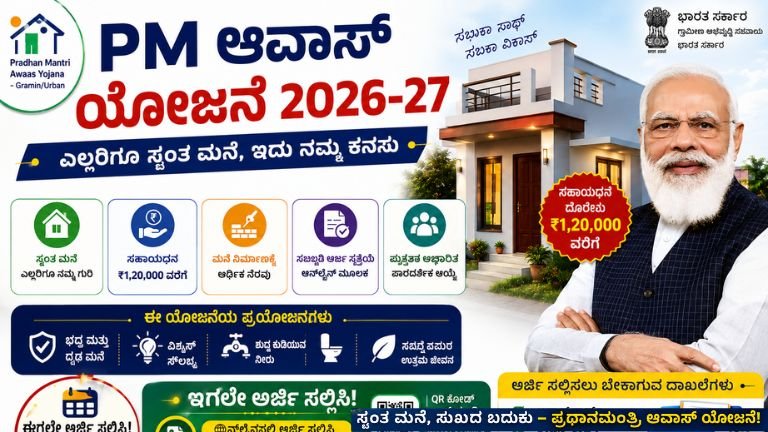
Pradhan Mantri Awas Yojana (PMAY) 2.0: The Complete Blueprint for 2026-27 G8
Owning a permanent, all-weather home is the foundation of structural security, economic stability, and human dignity. For millions of families across India navigating seasonal vulnerabilities, high urban rents, or unsafe temporary shelters, constructing a pucca house independently remains a steep financial hurdle.
To bridge this gap, the Government of India operates its flagship housing welfare initiative: Pradhan Mantri Awas Yojana (PMAY).
Moving through the 2026-27 fiscal cycle, the scheme operates under an advanced framework known as PMAY 2.0 (launched globally to expand coverage through 2029). Backed by a massive aggregate budgetary outlay of ₹10 Lakh Crore and a targeted delivery scale of 1 Crore (10 million) fresh housing units, PMAY 2.0 introduces overhauled income brackets, technology-driven construction incentives, and flexible interest subsidies for urban and rural citizens alike.
What is PMAY 2.0? Understanding the 2026-27 Core Framework
The updated PMAY 2.0 ecosystem splits cleanly into two administrative components to solve distinct geographic challenges: PMAY-Gramin (Rural) and PMAY-Urban 2.0.
The fundamental goal remains unchanged: transforming temporary or weak structures (katcha houses) into climate-resilient, concrete structures (pucca houses) equipped with mandatory core amenities like integrated sanitation, secure electricity configurations, and clean drinking water access.
The Fiscal Architecture of PMAY 2.0 (Urban Component Focus)
The financial deployment for this phase reflects a highly scaled institutional push. Key structural metrics defining current operations include:
| Parameter Framework | Metric Specifications & Scope |
| Total Investment Outlay | ₹10 Lakh Crore combined ecosystem value |
| Central Assistance Pool | ₹2.50 Lakh Crore dedicated directly from the Government of India |
| Target Implementation Window | Multi-year framework actively operating from 2024 through August 31, 2029 |
| Mandatory Floor Layout | Minimum carpet area configuration of 30 Square Meters per dwelling |
| Maximum Ceiling Layout | Maximum flexible layout cap of 45 Square Meters for direct grants |
The Four Operational Verticals of PMAY-Urban 2.0
To ensure that real estate realities, land ownership patterns, and variable income states do not block citizens from accessing assistance, PMAY-Urban 2.0 delivers financial aid through four distinct, specialized verticals.
I. Beneficiary-Led Construction (BLC)
The BLC vertical provides targeted financial assistance directly to individual eligible families who already own land but lack the liquid capital to construct an all-weather home.
-
Financial Assistance scale: Up to ₹2.5 Lakh paid out in systematic, structural milestone installments (Foundation, Lintel, Roof completion).
-
Core Target: Economically Weaker Section (EWS) households. If an applicant is landless but falls within the deep poverty category, state and UT governments are structurally incentivized to grant legal land rights alongside the construction framework.
II. Affordable Housing in Partnership (AHP)
For households that do not own land, the AHP system steps in. Under this layout, housing projects are developed in structural coordination between State Governments, Union Territories, Urban Local Bodies (ULBs), and private/public sector real estate developers.
-
Structural Delivery: Dedicated, planned housing complexes featuring sustainable construction designs.
-
Voucher System: Where properties are sourced or integrated from approved private housing projects, specialized housing assistance vouchers are deployed to close the affordability gap for EWS buyers.
III. Affordable Rental Housing (ARH)
Recognizing that a massive segment of the urban landscape consists of floating or short-term populations who prioritize affordable living spaces over permanent homeownership, the ARH vertical provides clean, dignified rental options near workplaces.
-
Target Beneficiaries: Urban migrants, industrial laborers, working women, daily-wage construction workers, street vendors, and students.
-
Models: ARH converts existing government-funded vacant housing complexes into rental units or offers structural incentives to public/private entities to build brand-new rental complexes close to major economic zones.
IV. Interest Subsidy Scheme (ISS)
The ISS serves as a direct reboot of older credit-linked models, designed to ease the burden of formal bank home loans for the urban poor and burgeoning middle class.
-
Subsidy Rate: Up to a 4% interest subsidy calculated on the first ₹8 Lakh of a formalized home loan.
-
Loan and Property Caps: Valid for home loans up to ₹25 Lakh, provided the total appraised value of the property does not cross ₹35 Lakh.
-
Maximum Lifecycle Benefit: A direct financial relief ceiling of ₹1.80 Lakh, credited systematically over a 5-year installment schedule to the beneficiary’s loan account.
Strict Income Categorization and Eligibility Criteria
Eligibility for PMAY 2.0 is closely tied to formalized annual household income thresholds, verified against digital taxation and banking networks.
Income Matrix Under PMAY 2.0
  [Annual Household Income]
             │
             ├─► Up to ₹3 Lakh   ──────► Economically Weaker Sections (EWS)
             │
             ├─► ₹3 Lakh to ₹6 Lakh ───► Low-Income Group (LIG)
             │
             └─► ₹6 Lakh to ₹9 Lakh ───► Middle-Income Group (MIG)
Essential Checklist for Applicants
To ensure clean processing through the verification nodes, every applying unit must tick off these primary regulatory boxes:
-
Citizenship: The primary applicant must be an absolute citizen of India.
-
Housing Deprivation Status: The applicant household—including spouse and unmarried children—must not own a permanent, pucca house anywhere across the geographical geography of India.
-
Exclusion of Previous Benefits: Neither the applicant nor any member of the core family unit should have ever received any central or state housing assistance grant from a prior welfare program.
-
Prioritizing Inclusivity: The system enforces equity across demographics. The portal automatically flags and prioritizes applications belonging to widows, single women, persons with disabilities (PwD), senior citizens, transgender individuals, Scheduled Castes (SC), Scheduled Tribes (ST), and recognized minority communities.
Comprehensive Documentation Roadmap
A major reason applications get stuck in verification cycles is poor or mismatched documentation. Ensure you have clean, legible digital copies and physical prints of the following documents before launching your application:
-
Identity & Address Proof: A valid government-issued Identity Card alongside local Address Verification documents.
-
Family Composition Evidence: A State-issued Ration Card, official family registry listing, or equivalent demographic document proving the total household count.
-
Income Verification Data: An official Income Certificate issued by a competent revenue authority, salary slips, or formal self-declaration documents validating the specific EWS/LIG/MIG status.
-
Property Ownership Documentation: Mandatory exclusively for the Beneficiary-Led Construction (BLC) track. This includes registered land deeds, property mutation documents, or land tax receipts proving undisputed ownership over the proposed construction site.
-
Banking Integrations: An active bank passbook or cancelled check leaf showing the clear IFSC code and account numbers.
-
Recent Photographs: Clear, passport-sized photographs of the primary woman applicant or co-owners.
Privacy & Identity Policy Note: Processing these steps requires submitting a valid identification number. To protect personal data privacy, ensure your number is verified directly through secure government e-KYC channels. The digits of sensitive government identifiers are never printed publicly on application receipt cards or tracking dashboards. Instead, they are replaced with a standardized placeholder value (e.g.,
[Identification Redacted]) to prevent data theft.
Step-by-Step Guide to Applying for PMAY 2.0
The application pipeline for 2026-27 is fully automated, removing intermediate agents and providing direct transparent access. Applicants can execute this process through an online self-service model or via ground assistance.
Online Application via the Official PMAY Portal
Physical Application Route (Offline Option)
For households that lack reliable internet or feel uncomfortable using online forms, the system maintains a robust physical application path:
-
Visit your local Common Service Centre (CSC) or your municipal corporation’s dedicated PMAY desk.
-
Request the official PMAY 2.0 application layout form. (Ensure you do not pay extra fees to unofficial brokers).
-
Hand over physical copies of your documentation packet to the data entry officer at the center.
-
The desk officer will upload your documents live into the MIS database and provide a physical Acknowledgement Receipt stamped with your structural reference tracking layout.
How to Track and Verify Your Beneficiary Status
After your application hits the central servers, it undergoes a multi-layer validation routine. First, Urban Local Bodies or Gram Panchayats run field checks to verify your housing status. Next, the system uses digital deduplication checks to ensure your family hasn’t received benefits elsewhere. Finally, your application moves into the official PMAY Beneficiary List.
You can check your status anytime using these direct methods:
I. Online Status Tracking
Visit the official portal and select the “Track Your Assessment Status” link. You can look it up using either of two data parameters:
-
By Application Reference Number: Input your unique tracking ID provided on your acknowledgment slip.
-
By Personal Parameters: Input your registered mobile number alongside the primary applicant’s name and district.
II. Mobile Application Integrations
Download the centralized PMAY(U) Mobile App or log into the unified UMANG Platform. Enter your profile data to access the live CLSS Awas Portal (CLAP) tracker. This dashboard gives you a real-time look at your subsidy approval stages and fund disbursement milestones.
Crucial Tips for a Successful Approval Cycle
To avoid rejection, keep these essential details in mind during the application phase:
-
Active Mobile Linkage: The mobile number you link to the application must remain active throughout the cycle. The portal transmits critical automated notifications regarding field verification dates, missing document flags, and financial disbursement schedules via SMS.
-
Aadhaar Seeding Consistency: Ensure your personal identification details perfectly match the spelling, date of birth, and data layout on your bank passbook and income certificates. Even minor typographic differences can trigger automated matching errors that freeze your application.
-
Geo-Tagging Readiness: If you are building under the BLC vertical, be prepared for official geo-tagging phases. Government verification officers will visit your site to capture geographic coordinates at the pre-construction, lintel, and final roofing stages to authorize fund releases.
Activating Your Journey to Homeownership
Pradhan Mantri Awas Yojana 2026-27 is a highly organized, pro-poor welfare mechanism engineered to convert the dream of a safe, stable home into an absolute reality. By understanding the PMAY 2.0 verticals, lining up your documentation early, and using the official electronic filing channels, you can seamlessly navigate the approval pipeline.
If you meet the eligibility criteria, take the first step today. Visit the official portal or your nearest local administrative center to begin building a more secure and resilient future for your family.