An international passport is more than a simple travel document; it is a foundational legal instrument of global identity, citizenship, and sovereignty. Whether you are expanding a corporate enterprise across borders, pursuing international academic research, or planning leisure travel, securing a valid passport is your mandatory first step.
The global identity architecture has evolved dramatically. Government agencies worldwide have transitioned toward heavily digitized, biometrically secure ecosystems. For example, the modern passport framework relies on e-passports—documents containing an embedded contactless microprocessor chip that stores biographical data and biometric identifiers matching the physical document.
This comprehensive guide breaks down the end-to-end administrative, legal, and procedural mechanics of applying for a professional, fresh, or renewed passport.
1. Anatomy of the Modern Passport: Understanding Document Classes
Before initiating an application, you must identify the precise class of travel document your itinerary or professional standing requires. Bureaucratic systems categorize passports into distinct types based on the applicant’s official status and intended purpose of travel.
Regular or Ordinary Passport (Type P)
The standard passport issued to private citizens traveling abroad for tourism, private business, education, or medical treatment. The “P” designation stands for “Personal.” It typically features a dark blue or black cover and is available in standard booklet sizes (typically 36 or 60 pages). Frequent corporate travelers generally opt for the 60-page booklet to ensure ample space for visas and border entry/exit stamps.
Official Passport (Type S)
Issued to government employees, designated officials, or individuals traveling on non-diplomatic, official state business. The “S” designation stands for “Service.” These documents grant specific administrative advantages, such as expedited visa processing or waiver agreements between participating states.
Diplomatic Passport (Type D)
Reserved for accredited diplomats, high-ranking government dignitaries, heads of state, and authorized foreign service officers. This document accords the holder international immunities and privileges under the rules of the Vienna Convention on Diplomatic Relations.
2. Comprehensive Document Matrix: Establishing Identity and Citizenship
The core of any passport application lies in the verification of your legal identity and national status. Government agencies operate under zero-tolerance policies for documentary discrepancies. A single typographic variation between certificates can trigger immediate administrative rejection.
To guarantee validation, compile your documentation according to the two primary verification pillars: Proof of Legal Identity and Proof of National Status/Address.
| Document Pillar | Acceptable Professional Evidence | Key Compliance Checks |
| Proof of Identity (PoI) |
• National Identity Card (e.g., Aadhaar, SSN Card) • Certified Birth Certificate • Pan Card / Tax Identification Document • Executive Driver’s License |
• Ensure full name matches down to the middle initial. • Photograph must reflect clear facial symmetry. • No physical damage or illegible stamps. |
| Proof of Address (PoA) |
• Registered Rent/Lease Agreement • Utility Bills (Electricity, Water, Gas under 3 months old) • Verified Bank Account Statement • Employer Certificate on Letterhead |
• Address must match current residential jurisdiction. • Post Office Box (P.O. Box) addresses are typically rejected as primary residences. |
The Non-ECR (Emigration Check Not Required) Distinction
For citizens of specific jurisdictions traveling to certain developing countries for employment, understanding your ECR status is essential. To qualify for automatic Non-ECR status—which eliminates administrative exit clearance hurdles—professional applicants should submit advanced educational qualifications (Matriculation/10th grade and above) or professional tax-paying documentation during the application cycle.
3. Step-by-Step Administrative Protocol: The Digital and Physical Pipeline
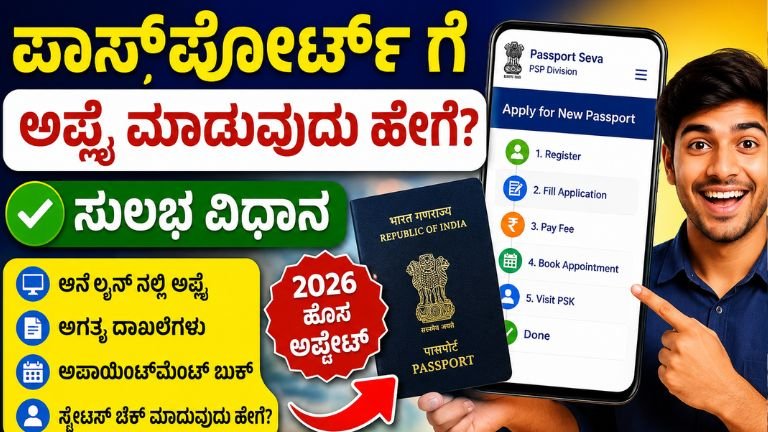
The modern passport application framework divides cleanly into two sequential phases: an online administrative filing stage and an in-person biometric enrollment appointment. Missing a single step in this sequence or presenting documents out of order will stall the issuance of your passport.
4. Mastering Biometric and Photographic Standards
Biometric facial recognition algorithms are highly sensitive to facial geometry, contrast, and obstructions. To prevent your photo from triggering a automated processing error, adhere strictly to the following parameters:
-
Neutral Facial Expression: Keep your mouth completely closed with eyes open and looking directly at the camera lens. Smiling, frowning, or squinting distort basic structural markers, leading to immediate image rejection.
-
Optics and Eyewear: Remove all eyeglasses, sunglasses, or tinted lenses. Even prescription eyewear can introduce glare or frame obstructions that block your irises and pupils.
-
Headwear Restrictions: Headwear is strictly prohibited unless worn for explicitly verified religious purposes. Even then, the headwear must not cast shadows across any portion of your face, and your facial profile from the base of your chin to the top of your forehead must remain completely visible.
5. The Police Verification and Security Clearance Phase
Because a passport is a sovereign security document, issuance requires verification that the applicant does not have a disqualifying criminal background or pending legal issues. In many jurisdictions, this involves a localized police verification process.
[System Data Entry] ➔ [Consular Approval] ➔ [Local Police Dispatch] ➔ [Physical/Digital Verification] ➔ [Final Printing]
Navigating the Field Verification
Once your in-person application is validated at the passport office, your file is securely routed to your local police authority. A verification officer will review your local records and may conduct an in-person visit to your declared residence to confirm your address and local standing.
To ensure a smooth verification process:
-
Inform your references or neighbors that a routine background verification check is underway.
-
Keep a duplicate set of self-attested identity and address documents on hand at your residence.
-
Ensure you are responsive to any phone calls or scheduled visits from the verifying authority.
Any active concealment of legal disputes, pending criminal litigation, or history of bankruptcy can result in your passport application being impounded under federal passport acts.
6. Managing Common Bottlenecks and Complex Scenarios
While a straightforward application moves quickly through the system, certain personal or professional circumstances require specific administrative handling.
Minor Applicants (Under 18 Years of Age)
Minors cannot legally execute a passport application on their own. Applications for minors require the explicit written consent of both parents or legal guardians. The validity of a minor’s passport is typically restricted to 5 years (as opposed to the standard 10 years for adults) to account for rapid changes in facial features during childhood and adolescence.
Name Variations After Marriage or Divorce
If you are updating your passport to reflect a post-marital name change, you must submit your official marriage registration certificate alongside your standard identity documents. In the event of a divorce and a return to a maiden name, you must provide a certified copy of the final divorce decree or an official name-change gazette notification.
Addressing Damaged or Lost Passports
Losing a valid passport creates a serious security risk. If your passport is stolen or lost abroad, you must immediately file a report with the local police and contact the nearest embassy or consulate to secure an Emergency Certificate (EC) for travel. If you are applying for a replacement passport from home, you will need to submit a formal loss report alongside your new application, which will undergo extra security review.
The official application gateway for Indian passports is managed by the Ministry of External Affairs.
Official Links
-
Main Application Portal: Passport Seva Online Portal
-
Direct Application Page: Process to Apply for Fresh/Reissue Passport
-
Track Your Application Status: Track Passport Status
⚠️ Security Warning: Always ensure you are on the official
.gov.indomain. Do not share your personal identification documents or make payments on any third-party websites, as there are many fraudulent replica sites online.
Final Delivery and Passport Management Best Practices
Once your application clears security and police verification, your passport moves to the printing stage. Modern security standards dictate that passports are delivered directly via secure tracking mail to your verified residential address. They cannot be picked up in person by third-party couriers, ensuring the document cannot be intercepted.
Validating Your New Document
The moment you receive your passport, check the printed biographical details for total accuracy:
-
Confirm your name matches your legal identity documents character-for-character.
-
Double-check your date of birth, place of birth, and gender designations.
-
Look over the passport number and document expiration dates.
-
Sign the designated signature block on the back or inside page using an indelible black or blue ink pen. An unsigned passport is legally invalid for international travel.
The Six-Month Validity Target
Many countries enforce a strict rule requiring your passport to have at least six months of validity remaining beyond your planned departure date. If your passport expires in less than six months, commercial airlines may deny you boarding, and immigration officials may refuse entry. As a professional standard, always schedule your passport renewal application nine months before your current document expires.